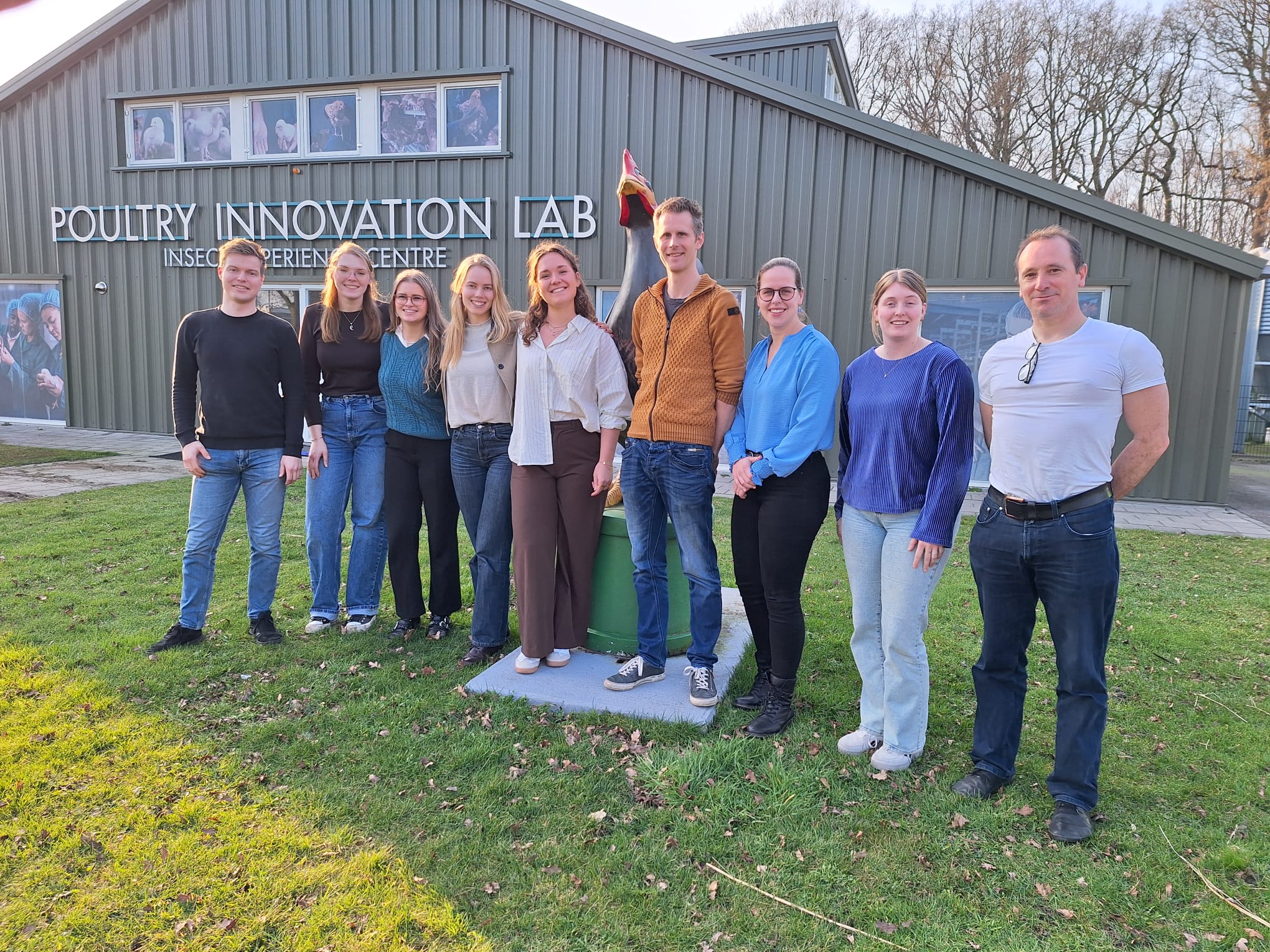
As part of an Academic Consultancy Training project at Wageningen University & Research, a multidisciplinary team of five master students (Animal Sciences, Biology and Consumer Studies) addressed this issue on behalf of the Poultry Expertise Centre. The aim of the project was to investigate the reasons behind the limited interest in poultry-related programmes among Dutch MBO, HBO and WO students.
Throughout the study, several educational institutions offering poultry-related programmes were involved. At Yuverta MBO Horst, Aeres MBO Barneveld, Aeres University of Applied Sciences Dronten, Wageningen University & Research, and the Faculty of Veterinary Sciences in Utrecht, study advisors and teachers were interviewed individually to discuss this issue.
In addition, group interviews were conducted with students enrolled in poultry-related programmes at Aeres MBO, Aeres University of Applied Sciences, Wageningen University & Research, and the Faculty of Veterinary Sciences. These interviews focused on enrolment patterns, study choice processes, perceptions of the poultry sector, career motivations, career opportunities, and other information needs.
Enrolment at MBO and WO level appears to be relatively stable, whereas some HBO programmes show lower intake numbers. The results indicate that student interest is strongly influenced by the visibility and image of the sector, the degree of practical exposure during the programme, and family or professional background.
For some students, additional barriers play a role, such as differences in popularity compared to other animal sectors, limited prior interest, low familiarity with the sector, and the perception that specialising in poultry may be restrictive. Limited practical exposure can also constitute a threshold. At WO level, programmes are generally more theoretical in nature, and additional practical exposure may help stimulate interest.
Students generally describe the poultry sector as structured, pragmatic and economically stable. At the same time, the diversity of career opportunities within the sector appears to be insufficiently known, which may affect its overall attractiveness.
Based on these insights, the project team recommends investing in increased visibility and targeted exposure to the sector. It is important to make use of alternative communication channels and to carefully select the right moment to introduce students to the sector. Furthermore, strengthening collaboration between education and industry, through internships, thesis projects, guest lectures and alumni engagement, remains essential.
Greater flexibility within educational pathways could also help reduce the perception of narrow specialisation. Clear communication towards students and parents about diverse career opportunities, as well as improved guidance regarding internships and international opportunities, may further lower existing barriers.
The interviews revealed that the principle of “unknown makes unloved” plays a significant role. Reducing this unfamiliarity is therefore a necessary step towards greater recognition and appreciation of the sector.